
.svg)


A report on the changing shape of entrepreneurship across Asia Pacific
A decade ago, starting a company meant assembling a small army before you had proven anything. You needed a developer to build the product, a designer to make it look credible, a researcher to understand the market, and enough savings or investor money to keep everyone paid while you figured out whether anyone actually wanted what you were making. Failure was expensive, both in money and in time. That equation has quietly and permanently changed, and nowhere is the shift more visible than across Asia Pacific, where a new kind of founder is emerging directly out of university hostels, engineering colleges and community colleges, armed with little more than a laptop, an internet connection and a set of AI tools that can now write code, draft a pitch deck, generate a logo, translate a customer interview, and model a budget, often in the same afternoon.
This is not a story about AI replacing entrepreneurs. It is a story about AI replacing the excuses that used to stop people from becoming one. The technical moat that once separated an idea from a working product has thinned dramatically, and what remains is something far more human: the ability to notice a real problem, understand the person who has it, and stay disciplined enough to build something they will actually pay for. This piece looks at what that shift means for students across the region, and for the universities, investors, and governments now racing to keep up with them.
The most immediate change AI has brought to early-stage entrepreneurship is the collapse of build time. A student with a rough idea for a fintech tool aimed at gig workers in Manila or a language-learning app for factory workers in Hanoi no longer needs to find and pay a developer before testing whether the idea has legs. Large language models can generate working prototypes, no-code and low-code platforms can be stitched together with AI assistance, and design tools can produce interfaces that once required a trained visual designer. The distance between an idea in someone's head and a clickable demo in someone else's hands has shrunk from months to days.
Research on venture formation has long shown that the biggest predictor of startup survival is not the cleverness of the original idea but the speed and quality of iteration after real customers interact with it. AI tools do not remove the need for iteration, but they remove much of the friction around each cycle. A founder can test a pricing page, get feedback, rebuild it, and test again within a single week. For a student balancing coursework with a side project, that compressed cycle is the difference between a startup that dies quietly in a notes app and one that reaches its first hundred users before the semester ends.
This democratisation is not limited to building the product itself. Market research that once required expensive subscriptions to research databases or paid consultants can now be approximated, at least at an early stage, through AI-assisted synthesis of public data, government statistics, and industry reports. Financial modelling, once the domain of an MBA-trained cofounder, can be scaffolded by AI tools that help a first-time founder understand unit economics well enough to have an intelligent conversation with an investor. None of this makes the underlying business easier to win. It simply means that a much larger pool of students, including those without engineering degrees or family capital, can now get far enough to find out if their idea deserves more of their time.
Asia Pacific enters this moment with a set of structural advantages that few other regions can match at the same time. The region is home to a very young population, with median ages well below those of Europe, North America, or East Asia's more mature economies, meaning a disproportionate share of the world's next founders are currently sitting in classrooms across India, Indonesia, Vietnam, and the Philippines. This is also a region that adopted the mobile internet before it adopted the desktop one, so entire generations of students have grown up building and consuming digital products through the phone in their pocket rather than a computer at a desk, which shapes the kind of products they instinctively know how to design.
India illustrates this dynamic clearly. The country's combination of a vast, English-speaking student population, a rapidly maturing digital payments backbone, and a growing appetite among domestic investors for early-stage bets has already produced waves of founders who started building in college rather than after it. South Korea and Japan bring a different but complementary strength: deep engineering talent, strong government-backed research funding, and corporations increasingly willing to back university spinouts rather than only building in-house. Singapore continues to function as the region's connective tissue, offering the regulatory clarity, banking infrastructure, and access to regional capital that allow a founder anywhere in Southeast Asia to incorporate, raise, and expand across borders with relatively little friction.

Indonesia, Vietnam, Malaysia, and Thailand add scale and diversity of problems worth solving. These are markets where large informal economies, uneven logistics infrastructure, and fast-growing middle classes create genuine, unglamorous problems in areas like last-mile delivery, small business bookkeeping, and access to credit, the kind of problems that do not photograph well for a pitch deck but that generate real revenue when solved even modestly well. The Philippines, with its large English-proficient workforce and deep familiarity with outsourced digital work, is producing founders who understand global service delivery from the inside, having often worked as freelancers or in business process outsourcing before starting their own ventures.

What ties these markets together is not a shared culture of entrepreneurship in the Silicon Valley sense, but a shared set of constraints that AI happens to be very good at easing. Capital has historically been scarcer here than in the West, talent has been unevenly distributed between a handful of large cities and everywhere else, and English fluency has varied widely even within a single country. AI tools that can translate, draft, code, and analyse at low cost do not erase these constraints, but they narrow them enough that a determined student in a second-tier city now has a meaningfully better shot than the same student did five years ago.
Universities across the region are being pulled, sometimes reluctantly, into a role they were not originally built for. The traditional academic model, built around lectures, examinations, and a linear path from degree to job, sits awkwardly alongside a generation of students who are already building products before they graduate. The more forward-looking institutions are responding by treating entrepreneurship not as an elective extracurricular activity but as a core part of technical and business education, embedding incubators, seed funds, and mentorship networks directly into the curriculum rather than leaving them to student clubs.
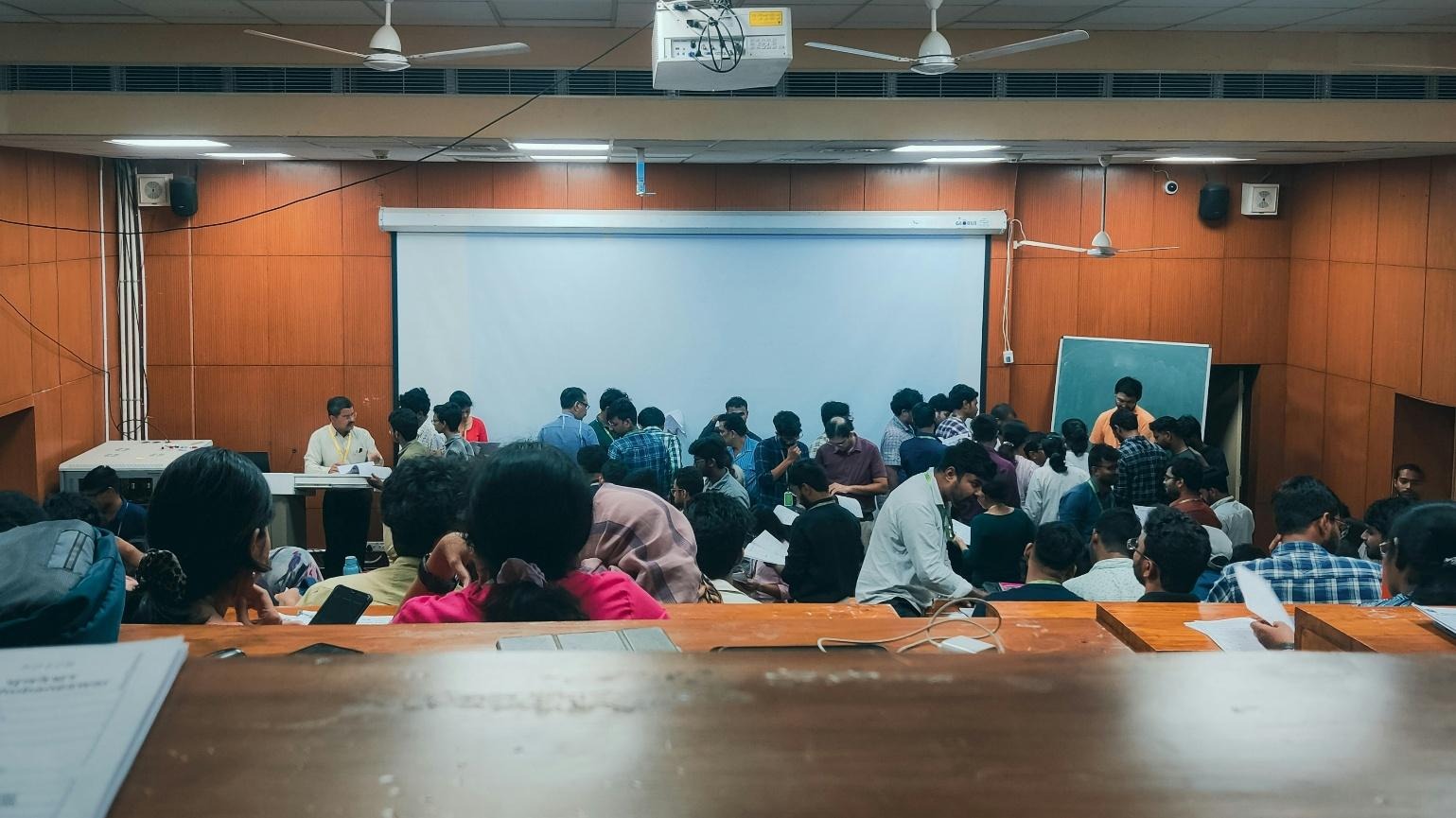
This shift is visible in the growing number of university-affiliated accelerators across India, South Korea, and Singapore that now offer small pre-seed grants, dedicated lab space, and structured mentorship from alumni founders. It is also visible in curriculum changes, with engineering and business programmes increasingly requiring students to work on live, ambiguous problems sourced from real companies or communities rather than only case studies with tidy, predetermined answers. The intent is not to turn every graduate into a founder, but to build comfort with ambiguity and iterative problem-solving as a transferable skill, useful whether a student eventually starts a company or joins one.
Faculty roles are shifting as well. Professors who once measured success purely through publications are increasingly expected to mentor student ventures, sit on advisory boards, and in some cases co-found companies alongside their students, a model long familiar in parts of the United States that is only now becoming normalised across Asian research universities. Governments are reinforcing this shift through national innovation missions, several of which now tie university funding partly to measurable entrepreneurship outcomes such as patents filed, startups spun out, or jobs created by student ventures, giving institutions a direct incentive to take this seriously rather than treat it as a public relations exercise.
If AI has narrowed the technical gap between a student with an idea and a working product, it has simultaneously widened the importance of everything AI cannot do well. Chief among these is judgement, the ability to decide which of the dozens of features an AI tool could help build are actually worth building, and which customer complaint is a signal worth acting on versus noise best ignored. This is a skill built through repeated exposure to real customers, not through reading about customer discovery frameworks, and it remains stubbornly human.

Communication and storytelling matter more, not less, in an AI-saturated landscape. When any competent team can produce a polished demo, the founders who stand out are the ones who can explain clearly why their particular version of the problem matters, to a customer, an investor, or a hire deciding whether to join a two-person team over a stable job offer. This is particularly relevant across a linguistically diverse region like Asia Pacific, where a founder's ability to code-switch between a formal investor pitch in English and a trust-building conversation with a first customer in a regional language can matter as much as the product itself.
Resilience and financial discipline round out the list. AI tools lower the cost of building, but they do not lower the emotional cost of watching an idea fail publicly, nor do they replace the discipline required to manage a shoestring budget for eighteen months before revenue becomes meaningful. Founders who have never had to negotiate a vendor contract, manage a difficult cofounder disagreement, or make payroll with limited cash still need to develop these muscles the old way, through direct, often uncomfortable experience that no AI assistant can simulate convincingly.
The same accessibility that makes AI tools so powerful for young founders also creates a set of risks worth naming honestly rather than glossing over in the spirit of optimism.
When thousands of students across the region reach for the same handful of AI tools to write their code, design their interfaces, and even draft their go-to-market strategy, there is a real risk of convergence, where products across a category start to look and behave identically because they were assembled from the same underlying components with the same default prompts. Differentiation increasingly has to come from a founder's specific insight into their customer, not from the tooling, and founders who skip the hard work of original customer research in favour of AI-generated assumptions about their market are likely to build competent but forgettable products.

Lower building costs have not been matched by an equally dramatic increase in early-stage capital across every part of the region. Investment remains concentrated in a small number of hub cities, and founders operating outside India's major metros, or outside Jakarta, Ho Chi Minh City, and Manila's central business districts, still find it harder to access seed capital, regardless of how quickly they can now build a product. AI has compressed the cost of building a company; it has not yet compressed the geographic bias of who gets funded to run one.
Lower barriers to entry cut both ways. If a determined student can now build a competent MVP in a weekend, so can dozens of other students solving the same problem, often within the same city or the same university programme. This raises the bar on execution and speed to market, and rewards founders who move quickly from idea to real customer feedback over those who spend months perfecting a product before anyone outside their friend group has used it.
Questions around data privacy, algorithmic bias, and the responsible use of AI-generated content are no longer abstract concerns reserved for large technology companies. A student building a lending or hiring product with AI assistance is already making decisions with real consequences for real people, often without formal training in the ethical and regulatory considerations those decisions carry. As more first-time founders build in sensitive categories like credit, healthcare, and employment, the region's regulators and universities alike will need to move faster on practical, accessible guidance rather than dense compliance documents few student founders have the time or legal literacy to parse.
Perhaps the most underappreciated risk is that AI tools are exceptionally good at helping founders feel validated without being validated. A chatbot can generate a plausible-sounding customer persona, a market size estimate, and a competitive analysis in minutes, all of which can create a false sense of confidence that substitutes for the slower, more uncomfortable work of actually talking to twenty or thirty potential customers. The founders who succeed are consistently the ones who treat AI-generated research as a starting hypothesis to test in the field, not as a finished answer.
For an AI-enabled founder generation to translate into durable companies rather than a burst of short-lived projects, the institutions around these students need to adapt with equal urgency.

None of these recommendations require heroic new investment. Most involve redirecting resources and attention that already exist within universities, government innovation ministries, and regional investment funds, toward a generation of founders who are, in many cases, already building without waiting for permission.
The rise of the AI founder is not a story about technology replacing ambition. It is a story about technology removing many of the reasons ambition used to stall out before it had a fair chance to be tested. Across India, Singapore, South Korea, Japan, Indonesia, Vietnam, Malaysia, Thailand, and the Philippines, a generation of students is discovering that the distance between a good idea and a working product has never been shorter. What will determine which of them build companies that last is not how well they can prompt an AI model, but how well they can listen to a customer, hold their nerve through failure, and keep building after the novelty of the tool itself has worn off. Asia Pacific, young, mobile-first, and increasingly well supported by its universities and policymakers, may be better placed than any other region to find out.


0 Comments