
.svg)


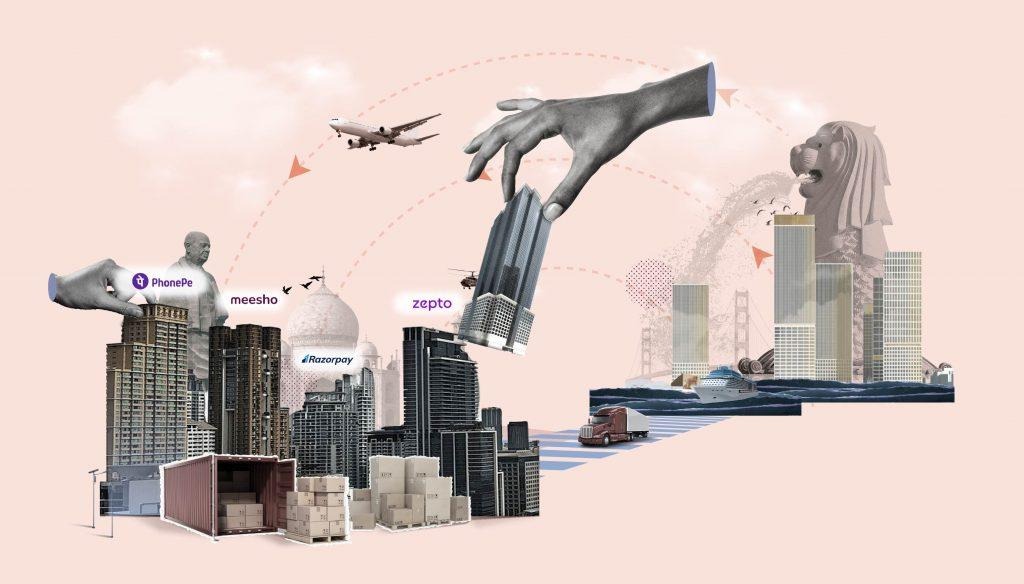
PhonePe, Groww, Pepperfry, Meesho, Razorpay, Zepto, and Flipkart have all either completed or are actively executing what the Indian start-up ecosystem now calls a "reverse flip": unwinding an offshore holding structure and re-domiciling the parent company in India. It is not a subtle trend. It is one of the more expensive, deliberate, and revealing bets happening in Indian tech right now, and it says as much about the maturing of India's capital markets as it does about any single company's strategy.
The original "flip" made sense for its era. Through the 2010s and early 2020s, Indian founders moved their holding companies to Delaware or Singapore because that was where the global venture capital was, where the legal and tax frameworks were more familiar to international investors, and where an eventual listing on the Nasdaq or the Singapore Exchange looked like the more credible path to a large outcome. India's own capital markets, and its regulatory environment for high-growth tech companies, simply had not caught up.
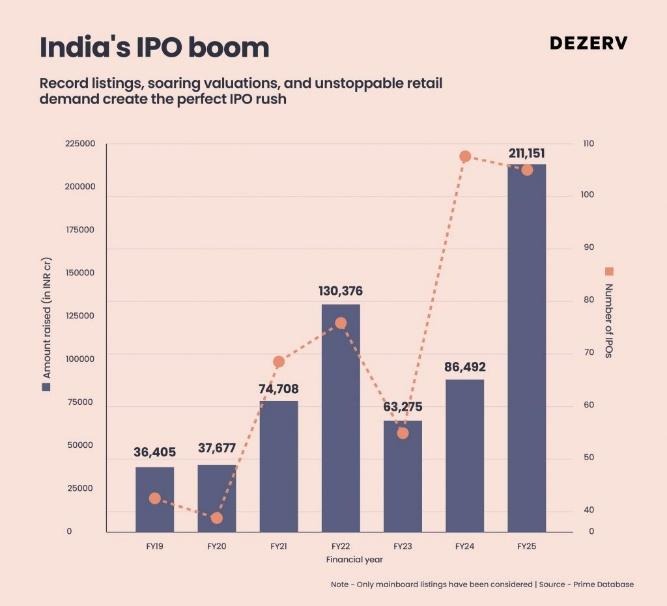
That calculus has now flipped along with the companies. India's domestic IPO market went from thin to genuinely deep in the space of about two years: 13 Indian tech companies listed on domestic exchanges in 2024 alone, including Swiggy, FirstCry, and Ola Electric, turning what had been an occasional event into a repeatable playbook. Indian-domiciled listings are also increasingly seen as commanding a premium over the offshore alternative, with market participants citing 30 to 50% higher valuation multiples for companies that list at home, driven by a scarcity premium, stronger brand recognition, and investors who understand the India growth story first hand. For a company whose customers, revenue, and workforce are almost entirely Indian to begin with, listing offshore increasingly looks like leaving value on the table rather than protecting it.
None of this is free, and the price tag is the part of the story that gets the most attention for good reason. PhonePe was among the first to make the move, shifting its domicile from Singapore back to India in 2022. Its investors, led by Walmart, paid an estimated Rs 8,000 crore, or nearly $1 billion, in capital gains tax as part of the transition, a sum PhonePe's own CEO described at the time as a genuine shock for a business still working toward maturity. That figure worked out to roughly 18% of the company's valuation at the time.

Groww followed in March 2024, merging its US-based holding company into its Indian parent entity. Its tax bill came in lower, around $160 million, or about 5.3% of its valuation, a smaller hit than PhonePe's but still a significant one. Razorpay completed its own US-to-India merger in May 2025, with estimates of the associated tax cost ranging as high as $200-300 million; the company has since filed a confidential draft IPO prospectus with SEBI in June 2026. Zepto, still weighing its own move, has reportedly modelled a tax exposure that could run anywhere from roughly $100 million to as much as $600 million depending on the structure chosen, a wide enough range that the final number will say a lot about how the deal gets built.
The reason the tax bills are so large comes down to simple mechanics: when a reverse flip is executed as a share swap, foreign shareholders are typically taxed in India on the difference between the value of their new Indian shares and the original cost of their foreign shares, which after years of valuation growth can add up to a substantial capital gains event. Inbound mergers can, under certain conditions, qualify for tax neutrality under India's Income Tax Act, which is part of why some companies structure their flips as mergers rather than swaps wherever the cap table allows it.
There is no single template. Companies generally choose from a handful of structures depending on how their cap table, ESOP pool, and investor jurisdictions are arranged. A merger or amalgamation route, which requires approval from the National Company Law Tribunal (NCLT) and compliance with FEMA's cross-border merger regulations, tends to be the cleanest long-term structure but is also the slowest, typically taking six to nine months to clear. A straightforward share swap, where foreign shareholders exchange their shares for shares in the new Indian parent, moves faster but triggers the capital gains tax event described above. A small number of companies use asset transfers or hybrid structures instead, usually when intellectual property sits directly with the foreign entity.
Regulatory reform has been quietly doing a lot of the work to make any of this feasible at scale. A 2024 amendment to the Companies Act introduced a fast-track merger route specifically for cases where a foreign parent is merging into a wholly owned Indian subsidiary, cutting down what used to be a much heavier approval process. Reforms from the RBI and the Ministry of Corporate Affairs more broadly have made the mechanics of cross-border restructuring less cumbersome than they were even three years ago, which is a large part of why reverse flipping has gone from a rare, bespoke transaction to something closer to a standard pre-IPO step.
Flipkart's reverse flip illustrates that the path is not purely a matter of tax and paperwork. The company, which moved its headquarters to Singapore back in 2011, secured NCLT approval in 2026 to merge eight Singapore-registered entities into its India-incorporated operating company, clearing the way for a planned domestic IPO filing later in the year. But because Chinese technology company Tencent holds a stake in Flipkart, the restructuring also required separate clearance under Press Note 3, the government policy that mandates additional scrutiny for investment linked to countries sharing a land border with India. It is a reminder that for companies with complex, multi-jurisdiction cap tables, a reverse flip can run into regulatory considerations that have nothing to do with tax at all.
Cost alone does not explain why companies are doing this anyway; the timing does. Legal advisors working on these transactions describe reverse flipping as most sensible for companies roughly two to three years out from an IPO with India as their primary market, since an early move gives a company time to settle into Indian regulatory and governance norms, rebuild investor relationships domestically, and demonstrate a track record of India-domiciled reporting before it goes in front of public market investors. Late-stage investors are increasingly asking founders directly whether a company is genuinely India-focused or simply running an offshore tax optimization, and a completed reverse flip has become one of the more credible ways to answer that question. Early-stage companies, by contrast, are generally advised to stay put; the legal costs, tax exposure, and ESOP resets involved make a flip hard to justify before a company is close enough to a listing to need it.
The roster of companies that have completed or committed to a reverse flip now spans several categories of Indian tech: fintech and financial infrastructure (PhonePe, Groww, Razorpay, Pine Labs), e-commerce and quick commerce (Flipkart, Meesho, Zepto), and consumer and lifestyle brands (Pepperfry). What connects them is less their sector than their timeline: each is either already public, actively preparing an IPO, or is widely expected to file one within the next two to three years, and each has concluded that an India-domiciled structure is now a precondition for that plan rather than an optional nicety.
Source: Deserv
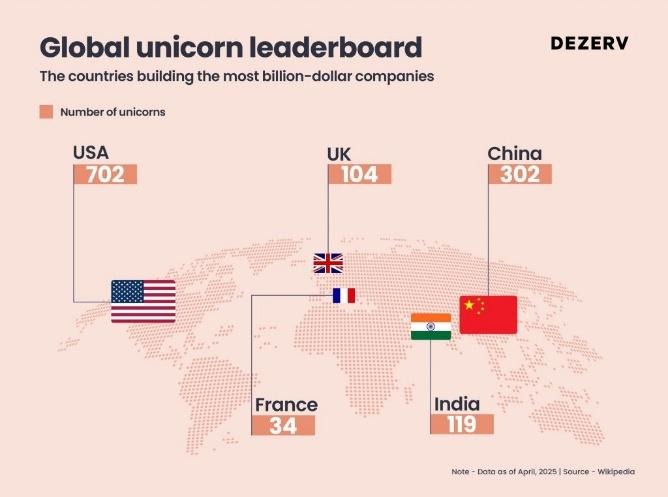
The reverse flipping wave is a fairly direct signal of how much India's capital markets have matured in a short window, and it has implications beyond the individual companies making the move. A jurisdiction that startups actively pay hundreds of millions of dollars to move into, rather than simply tolerate, is a different kind of market than the one that existed even five years ago, and it changes the calculus for the next generation of Indian founders deciding where to incorporate in the first place. It may also be worth watching as a signal for the rest of Asia: Singapore has long been the default offshore holding jurisdiction for founders across South and Southeast Asia, and if India's experience shows that founders will pay a premium to be domiciled where their listing, their investors, and their governance regime are aligned with their actual market, that is a pattern regional regulator elsewhere may eventually want to replicate rather than lose out to.
The reverse flip wave is unlikely to be finished. With Razorpay's DRHP already filed and Flipkart's domestic listing plans advancing through 2026, and with Zepto still working through the tax math on its own move, the next twelve months are likely to bring several more instances of the same pattern: a company that once flipped abroad for capital access deciding that coming home, even at nine or ten figures in tax cost, is the more credible route to the public markets its business was actually built for. What began as a handful of high-profile, high-cost transactions is increasingly looking like the default playbook for any India-focused company with serious IPO ambitions.
Sources


0 Comments