By subscribing you agree to with our Privacy Policy and provide consent to receive updates from our company.
Business Insight
Social Enterprise
How Sungai Watch & Sungai Design Are Turning Indonesia’s Plastic Crisis into a Global Model
Asia Tomorrow Original
January 21, 2026
Turning Waste into Waves:
How Sungai Watch & Sungai Design Are Turning Indonesia’s Plastic Crisis into a Global Model
Introduction
Indonesia’s rivers are lifelines for millions—but also unwitting pathways for one of the planet’s most serious environmental problems. Tens of thousands of tons of plastic flow from rivers into the oceans every year. For communities in Bali, Java, and beyond, polluted waterways disrupt fishing, tourism, agricultural life, and health.
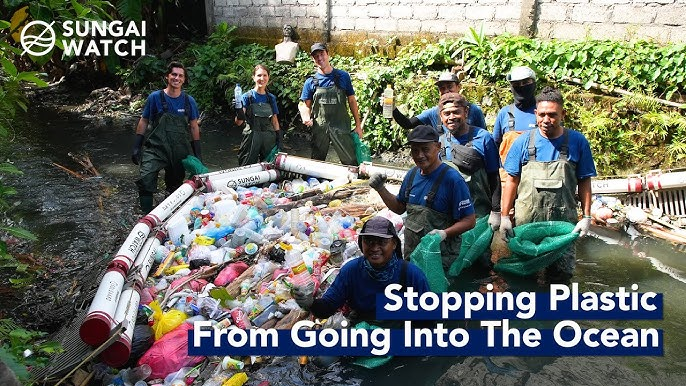
Image Source : Youtube
Enter Sungai Watch and Sungai Design. These sister initiatives haven’t merely raised awareness—they are stopping plastic upstream and converting it into value. Their story offers an example of how environmental activism and circular business models can work hand in hand. What follows includes both the inspiring narrative and the hard numbers that show what works—and what scale they’ve already attained.
Origins & Founding Story
Founders: The Kaasen siblings—Gary, Kelly, and Sam—long engaged in environmental work in Bali. Witnessing plastic choking rivers sparked the founding of Sungai Watch in 2020, under Make A Change World.
Sungai Design was later spun out (around 2022-2023 period) as the upcycling/social enterprise arm, to handle the plastic collected.
The core insight: clean up rivers and find a way to make the waste useful, so the effort is sustainable.
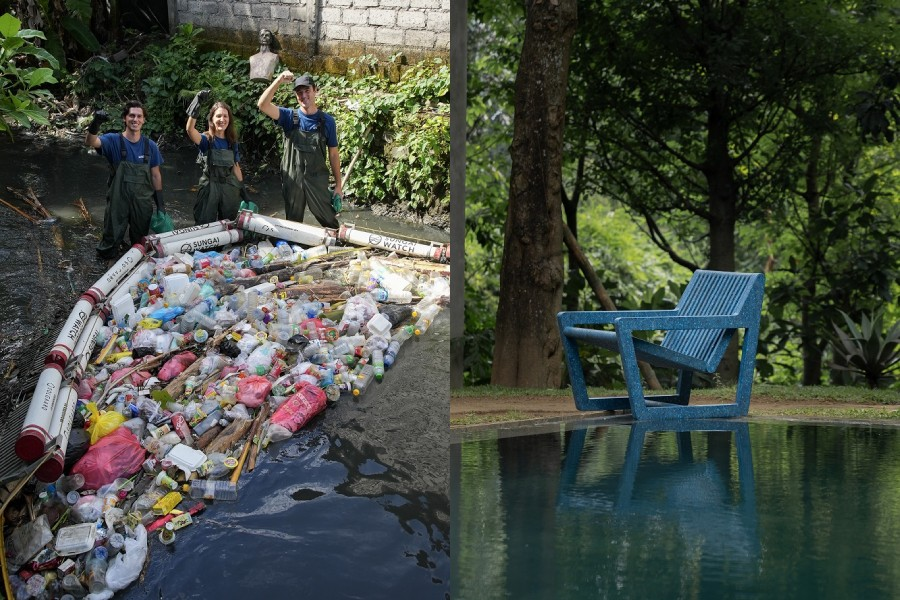
Image Source : NowBali
Key Metrics & Progress to Date
Here are some of the most recent and verified numbers:
Metric
Value
Number of barriers installed
~ 268 barriers (mainly in Bali, with some in Java)
Plastic collected
Over 1.7 million kilograms (1,700,000 kg) of plastic waste to date from rivers and waterways
Organic / non-plastic waste also collected
Hundreds of thousands of kilograms of organic waste (e.g. ~400,000 kg in some reports) in addition to plastic in certain cleanup events.
Number of community cleanups / volunteers
Over 100+ cleanups, dozens of villages engaged, hundreds of “river warriors” (staff + volunteers).
Geographic reach
Primarily Bali, expanding into East Java and other polluted rivers in Java. Multiple “village models” set up (villages with 15-30 barriers per village).
Organizational scale
Over 100 full-time staff / “river warriors” involved in operations.
Funding, Grants & Partnerships
Grants / Philanthropic Support
Sungai Watch has been a recipient of the Hilton Effect Foundation grant (2021). Although the full amount specific to Sungai Watch was not published, they were one of the organizations supported in the regional Hilton Effect grants.
They also received a grant from Airbnb Community Fund (2025) to support operations and strengthen community engagement.
Donations and Business Sponsorships
Local businesses and hotels (e.g. W Bali — Seminyak, Hard Rock Hotel Bali) have supported Sungai Watch via partnerships, sponsorship, and events (e.g. charity runs) that raise funds for barriers or equipment.
The organization avoids taking funds from plastic producers (as publicized) to maintain credibility in their advocacy.
Revenue from Upcycled Products (Sungai Design)
Less detailed public data is available. Some info: a portion (~20-30%) of collected plastic is processed into furniture/design products.
Example: the Ombak Seater uses ~2,000 plastic bags per unit. Revenue from design products helps fund further clean-ups.
Scaling & Operational Model
Village Model: Sungai Watch introduced a “Village Model” framework: each village has ~15-30 barriers, staffed by ~12-15 people, responsible for daily barrier maintenance, trash sorting, and local outreach. Small villages, under this model, can remove ~100,000 kg of plastic annually.
Types of barriers: Over experimentations (booms, nets, cages, etc.), they found “floaters” and “mini-floaters” to be most scalable and cost-efficient.
Data & Monitoring: Each barrier is monitored; waste is counted, weighed, categorized by brand/type. This helps with brand audits, awareness, and strategic placement of barriers.
Gaps & Financial Unknowns (Design Side)
While Sungai Watch’s metrics are relatively well documented, the public data around Sungai Design’s revenue, cost of production, margins, and profitability are much less visible. For example:
No published figures for total revenue from product sales.
No detailed cost breakdowns (e.g. processing, labor, distribution).
It is not clear exactly how much of the plastic collected is upcycled vs how much is landfilled or recycled via external partners. Sources say ~20% is converted into products, meaning the remainder might still be in sorting, recycling, or waste streams.
Combined Strategy & Lessons (with Data)
Some strategy lessons supported by the data:
Proof of scale builds credibility: Achieving ~268 barriers and over 1.7 million kg of plastic means Sungai Watch isn’t just symbolic—it demonstrates operational strength.
Local staffing and community model matter: Over 100 full-time staff (“river warriors”) implies sustained labor costs; local involvement helps reduce friction and builds ownership.
Diversified funding is critical: Grants + business sponsorships + product sales = multiple revenue streams. This reduces reliance on any single funding source.
Upcycling as value capture, but limited: Because only ~20-30% of plastic gets turned into products, there is a gap. Scaling up design output requires investment in capacity, automation, and market channels.
Geographic expansion requires adaptation: Expanding beyond Bali into Java shows both need and complexity: rivers are larger, pollution sources multiplicative, regulation more complex.
Conclusion (With Data-Backed Reflections)
Sungai Watch & Sungai Design have already made significant headway: hundreds of river barriers in place, over a million kilograms of plastic intercepted, hundreds of thousands of community engagements made. Their model combines environmental impact with emerging economic value.
For entrepreneurs and environmental innovators, their journey highlights:
The importance of tracking metrics early (kg collected, barriers installed, staff count, community reach).
Ensuring governance and transparency, which helps with grant and trust-building.
Recognizing that even well-designed solutions have operational costs and partial conversion rates (i.e. not all waste becomes a product).
If Sungai can continue increasing the proportion of plastic that becomes valuable products, scale barrier installation to their target of 1,000 barriers, and secure reliable funding, their model could become a globally replicated blueprint—not just for Indonesia, but for any region with river plastic leakage.

.svg)




0 Comments